
I was supposed to be in Fort Worth today for what would’ve been the Texas Business Court’s first-ever jury trial. After a final pretrial conference on Friday afternoon, the case settled over the weekend. So instead, I’m writing about the trial that almost was.
Since the Texas Business Court opened its doors on September 1, 2024, practitioners have been left to wonder how the 10-judge specialized trial court would handle contested trials. This case—which involved a fraud claim between alleged business partners—was poised to provide the first real answers. I served as embedded appellate counsel on the defense side.
The Court was ready
The Business Court demonstrated the efficiency and focus the legislature envisioned when it created the specialized tribunal. Following two pretrial hearings—including one during Christmas week—the Court:
- Issued a detailed pretrial order governing voir dire, opening statements, exhibits, the jury charge, the daily schedule, and trial time limits
- Ruled on exhibit objections and preadmitted most exhibits to streamline trial presentation
- Ruled on motions in limine to frame the remaining evidentiary issues
- Resolved threshold legal issues to avoid mid-trial disruptions
- Granted a motion to bifurcate punitive damages to simplify the liability phase
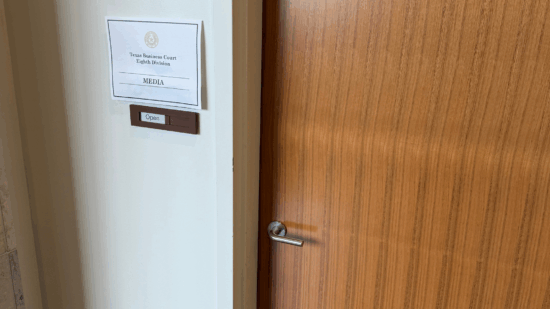
By Friday evening, the parties had tested courtroom technology, received jury questionnaires, and were primed for voir dire. The Court had even reserved a conference room for media, recognizing that this trial carried significance beyond the parties.
This level of attention was possible in part because the Business Court lacks the docket pressure common in many Texas trial courts, allowing it to devote sustained attention to complex commercial matters.
Overall, the experience resembled a hybrid of how state trial judges and federal judges handle their dockets—the familiarity of Texas state-court procedure combined with the hands-on case management more typical of federal practice.
What this signals for practitioners
Even without a verdict, this experience offers a preview of Business Court trial practice:
- Expect compressed timelines. The Court scheduled hearings when needed, including over holiday weeks and on the Friday afternoon before a scheduled Monday morning trial. The commitment to keeping complex cases moving is real.
- Be trial-ready earlier than usual. Preadmission of exhibits and early resolution of legal issues require lawyers to be trial-ready well before the first day.
- Plan for an efficiency-driven courtroom. Preadmission, advance rulings, media accommodations, and technology infrastructure all point toward trials that move.
Embedded appellate counsel in action
This would have been my second multi-week jury trial in six months. While appellate work and briefing remain central to my practice, serving as embedded appellate counsel gets me out from behind my desk and into the courtroom while there’s still time to influence the outcome.
Being there for pretrial and trial lets me shape the record as it’s built. Objections, arguing contested issues, and strategic calls happen in real time. That’s where appellate perspective can make the biggest difference—not after the verdict, but before.
Takeaway
The Texas Business Court’s first jury trial will have to wait, but this close call showed a court prepared to handle complex commercial litigation efficiently. For lawyers with matters in the Business Court, the lesson is clear: come ready to try your case, because the Court will be ready for you.